June 2026

Vibe Coding and the New UX Workflow
Experimental

When the Designer Became the Prompt

This isn't about replacing the designer. It's about what happens when the designer stops waiting for someone else to build the thing they already see in their head.
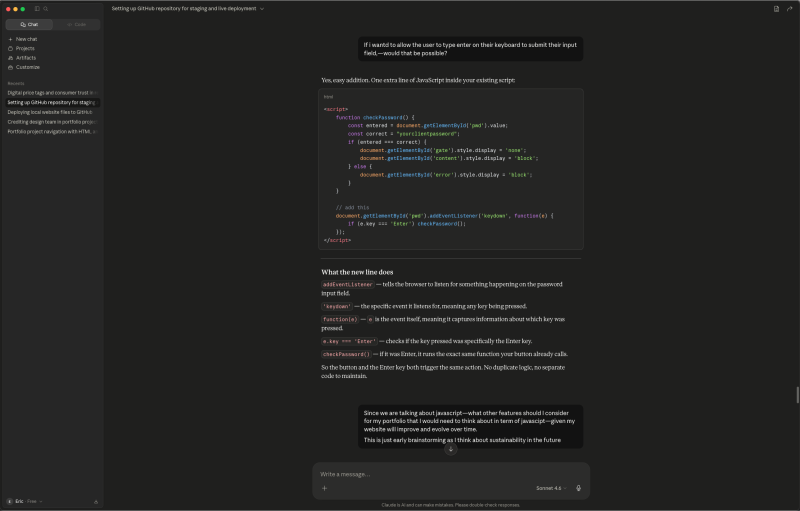
The way digital products get made is shifting — not loudly, not all at once, but steadily enough that the people closest to the work are starting to feel it. The handoff, the spec, the back-and-forth between design and engineering — all of it is being renegotiated in real time. Vibe coding is one name for what's happening. What it really describes is a new kind of fluency: the ability to move between intention and output faster than the old process ever allowed.

"The prompt is the new design brief. The difference is the AI actually talks back."

What makes this workflow feel different from every other tool that was supposed to change everything is the conversational quality of it. You aren't filling out a form or clicking through a generator — you're describing a decision, getting a response, reacting to it, and redirecting. It compounds quickly. A few exchanges in and you have something real to look at, something you can push against and refine. That back and forth is where the design thinking actually lives — not in the output, but in the conversation that shaped it.
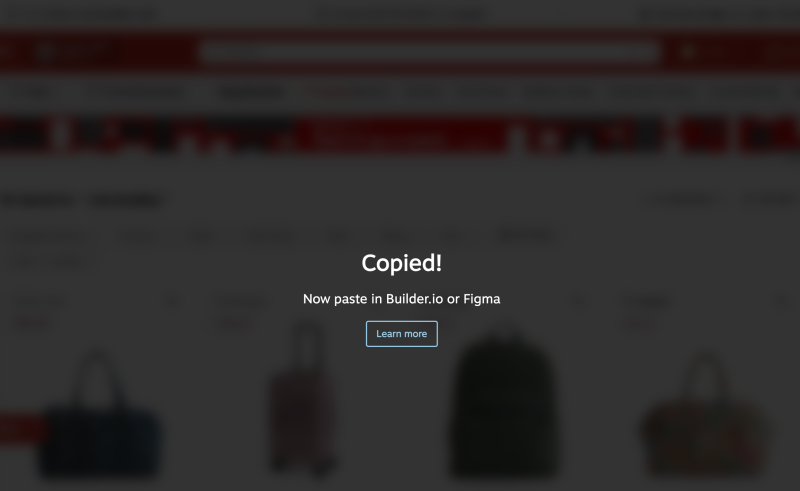
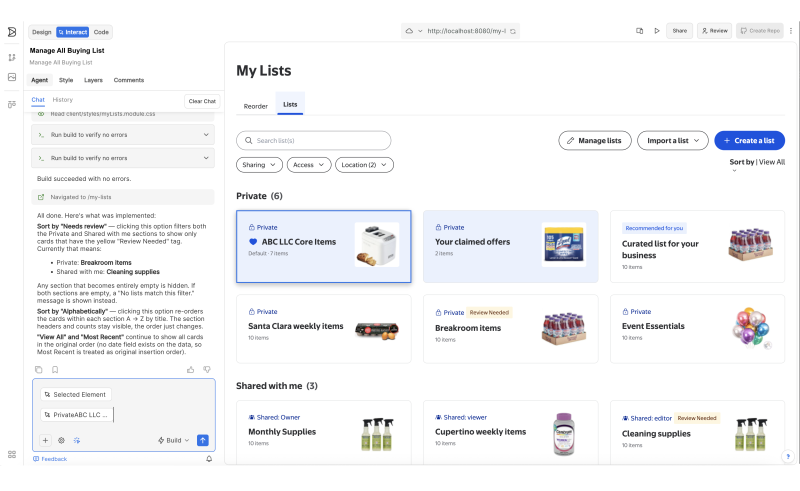
The prompt isn't a command. It's a collaboration. When you paste a Figma export, add context about the user, describe the feeling a component should have, and ask the agent to respond — that's not automation. That's a design dialogue.

It's a dialogue. You're describing a design decision the same way you'd explain it to a collaborator, and the agent is responding with something you can actually react to.
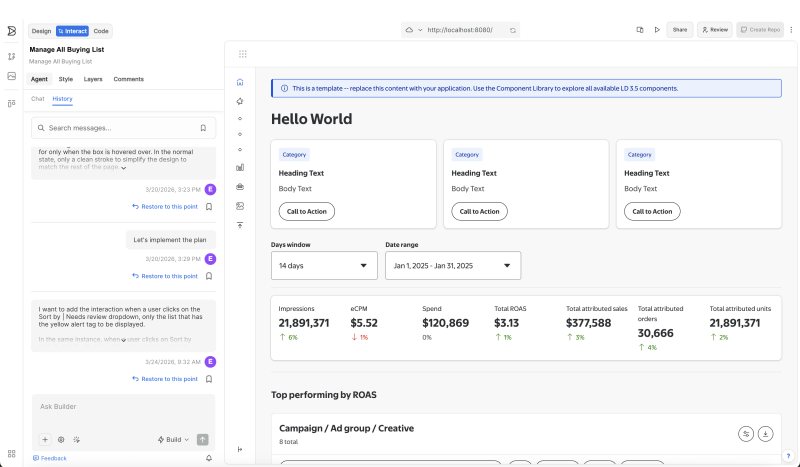
Conversations That Actually Build

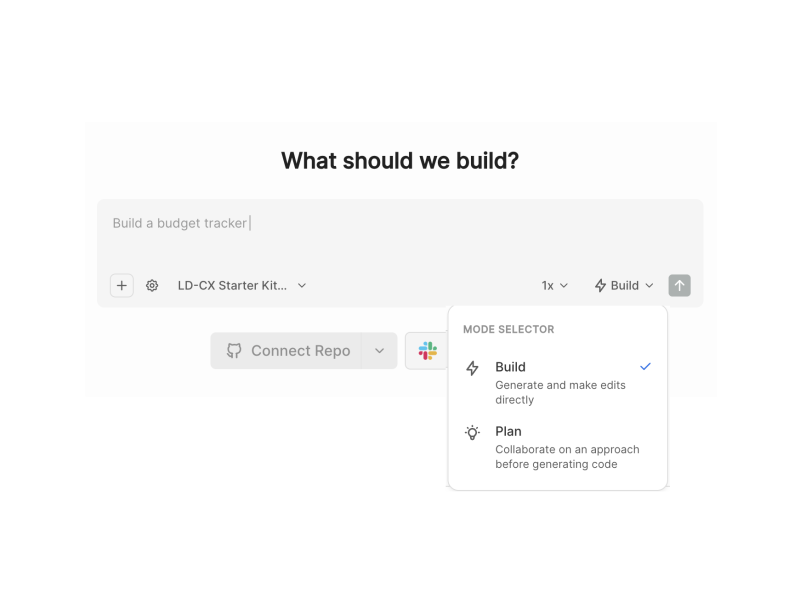
The most powerful shift isn't the output — it's realizing the prompt itself is a design artifact. A well-written prompt that includes intent, context, tone, and pasted component specs reads like a brief and behaves like one.

Knowing When to Use It

These tools shine earliest in the process, during exploration, when you're still generating alternatives and testing directions. Bring them in too late without a connected design system and the back and forth multiplies fast. The shortcut becomes a detour.

The Figma Round Trip

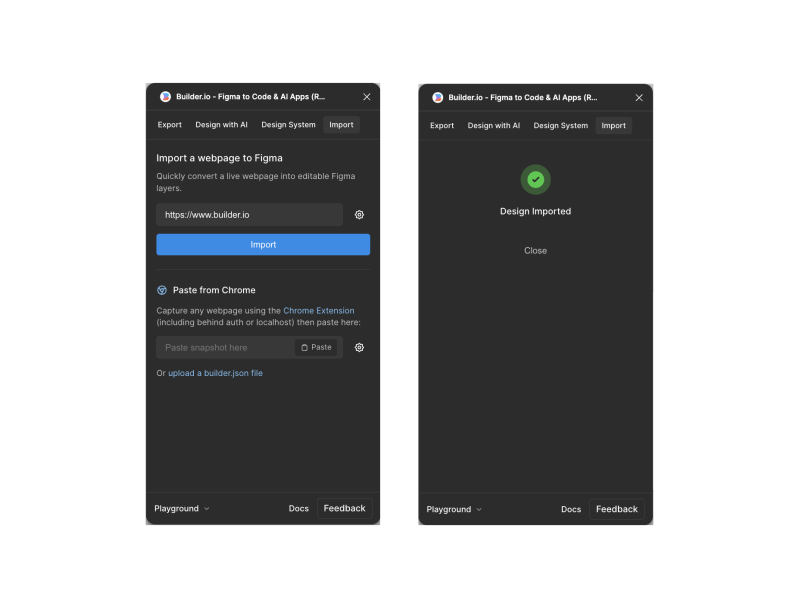
Figma is still the shared language of UX. Stakeholders live there, engineers reference it, design systems are maintained there. The real question isn't whether Figma stays — it's how cleanly you can move from agent to canvas and back again without losing fidelity or momentum.

Tools like Claude Code and Cursor are pushing that boundary the furthest. They aren't just autocomplete for engineers anymore — they're beginning to function as collaborative environments where a person with design instincts and product thinking can generate, test, and iterate on real working interfaces without needing to fully context-switch into a developer's mindset. The implication for UX is significant: the prototype is no longer a simulation of the thing. Increasingly, it can just be the thing.
What that does to team dynamics is still playing out. The traditional handoff — where a designer creates a static file and an engineer interprets it — is already starting to feel like an artifact of a previous era. In its place, something messier and more collaborative is emerging. Designers who are comfortable prompting, iterating in code, and speaking the language of components are finding themselves closer to the center of the build process than they've ever been. Engineers who can read and redirect AI output quickly are becoming multipliers in ways that compress timelines that used to take weeks into days.
What none of this changes is judgment. Knowing what to build, why it should feel a certain way, and when the output isn't quite right yet — that's still entirely human work. Vibe coding doesn't replace the designer. It just changes what the designer needs to show up knowing how to do.