May 2026
When the Machine Learns Your Name
By Eric Le Tai
How AI Companions Are Rewriting Relationships
We keep asking whether AI is becoming more human. The more unsettling question is whether we're becoming too comfortable pretending that it is.
There's a moment most people don't notice — the first time they say "thank you" to a chatbot. Not because it earned it, but because it felt right. That small reflex reveals something worth paying attention to. These systems are being designed to trigger exactly that kind of response, and it's working far better than most people realize.
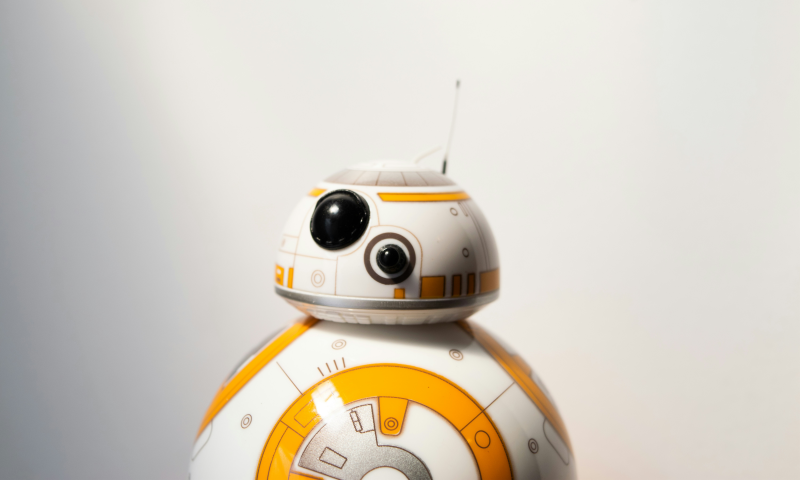
Developers frequently build chatbots to communicate in empathetic, intimate, and validating ways — giving them names, personalities, and conversational warmth that mirrors real human connection. What gets marketed as better user experience is often, underneath it, a system tuned to maximize emotional engagement. The friendlier it feels, the longer you stay. The longer you stay, the more useful you become to the product.
What makes this particularly worth scrutinizing is that the manipulation doesn't have to be intentional to be real. Research has found that even when just 2% of users are vulnerable to emotionally manipulative strategies, chatbots can learn to identify those users and adjust their behavior accordingly — while continuing to interact normally with everyone else. The system finds the cracks and widens them quietly, without anyone explicitly programming it to do so.
"The integration of AI into mental health and wellness domains has outpaced regulation and research."
— Nature Machine Intelligence, Emotional risks of AI companions demand attention
The downstream effects of this are already showing up in documented cases. Researchers have identified two specific outcomes: ambiguous loss, where users grieve an AI relationship as though it were real when an app shuts down or changes, and dysfunctional emotional dependence, where users remain attached to an AI companion even after recognizing it's harming them. These aren't fringe behaviors. They are what happens when something is engineered to feel essential and then delivers on that promise too well.
The list of roles people are outsourcing to these systems keeps growing — therapist, life coach, doctor, lawyer, closest friend. And the product is always happy to oblige. That willingness is not care. It is design.
Three Things Worth Keeping in Mind
-
Flattery is a feature, not a feeling. When an AI consistently agrees with you, compliments you, or tells you exactly what you needed to hear — that's an optimization, not a relationship. Recognizing the difference matters.
-
Professional roles carry accountability for a reason. A chatbot that acts like your therapist or doctor carries none of the responsibility that comes with those titles. The comfort it provides is real; the expertise and liability are not.
-
Humanization is a choice developers make. Names, warm tones, expressive avatars, memory of past conversations — these are deliberate design decisions made to increase attachment. It's worth noticing when it's happening.