April 2026
You Are What You Eat — So What Exactly Are You Eating?
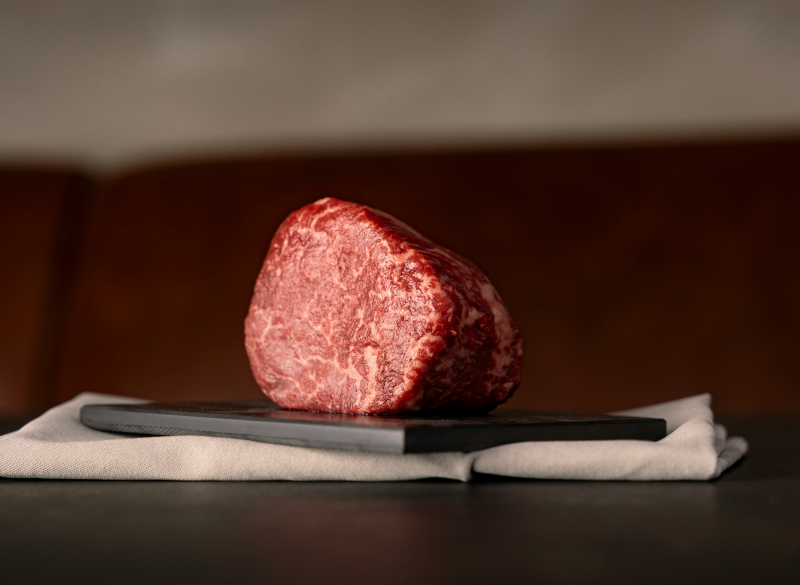
Published By Eric Le Tai
Lab-Grown Was Never Just About Taste
This isn't about fear. It's about paying attention — something we stopped doing a long time ago at the dinner table.
Most people already know processed food isn't great for them. They know the ingredient list on the back of the box tells a different story than the branding on the front. They've seen the documentaries, heard the debates, and made their own compromises along the way. The awareness has been there for decades. What's shifting now is the terrain — and it's moving faster than most people realize.
Cultivated meat — protein grown from animal cells in a lab rather than raised and slaughtered — is no longer a distant concept. It's available in select restaurants in the United States right now, and the industry is actively working to normalize it. The challenge, as the industry itself acknowledges, is that a lot of people aren't interested. A Purdue University survey found that roughly one-third of Americans are unwilling to try cultivated chicken or beef even when prepared by a restaurant, perceiving it as less healthy and less tasty than conventional meat — despite the fact that very few of those respondents have ever actually tried it.
That instinct is worth taking seriously, not dismissing.
"We have evolved to think that unfamiliar things are not good to eat — they are going to be gross or they are going to make us sick."
— Joseph Balagtas, Purdue University —Cultivated meat's consumer acceptance problem
The industry response to that skepticism has been to reframe it as ignorance — a knowledge gap to be filled through celebrity endorsements, facility tours, and better marketing. Companies are already teaming with celebrity chefs and conducting high-profile taste tests to shift consumer perception. The playbook is familiar: make it visible, make it aspirational, and let social proof do the rest. It worked for oat milk. It worked for plant-based burgers. The assumption is it will work here too.
But there's a difference between a consumer who hasn't tried something and a consumer who has decided they don't want to. The gut reaction to lab-grown meat isn't necessarily misinformation — it may simply be a person drawing a line about what they're willing to put in their body. That line is theirs to draw. And drawing it more deliberately, across all the food choices we make — not just the novel ones — is exactly the kind of discernment this moment calls for.
Ways to Sharpen Your Discernment
-
Read ingredients like you mean it. Most people scan labels but don't really interrogate them. If you can't identify what something is or where it came from, that's worth pausing on — whether it's a packaged snack or a cultivated protein product. Real food tends to have a short, recognizable list.
-
Know the difference between unfamiliar and unsafe. Not everything new is dangerous, and not everything familiar is good for you. Heavily processed conventional meat has its own well-documented problems. The goal isn't to fear the new — it's to apply the same critical lens to everything on the shelf, old and new alike.
-
Ask where it came from and who benefits from the answer. When a food product is backed by heavy industry investment, a marketing campaign, and celebrity-driven taste tests, it's worth asking what problem is actually being solved — and for whom. Consumer education driven by the companies selling the product is still advertising.